- Jan 15, 2026
Share this post on:
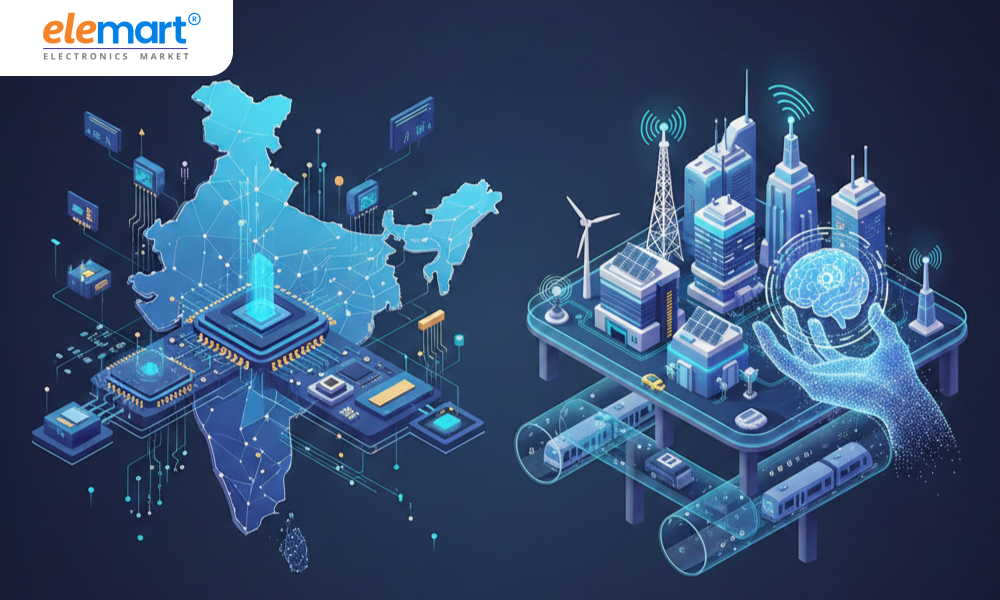
In recent years, India has seen a technological renaissance, fueled by the government’s ambitious Digital India initiative. This vision, launched in 2015, aims to transform India into a digitally empowered society and knowledge economy. A significant part of this transformation is the widespread adoption of smart electronic infrastructure, which plays a pivotal role in connecting the country’s diverse sectors—from agriculture and healthcare to education and governance. The rise of the Internet of Things (IoT) and smart sensors has propelled this change, creating an ecosystem where smart products and innovations are seamlessly integrated into daily life.
The Role of Electronics in Digital India
At the heart of this digital transformation is the increasing reliance on smart products with IoT capabilities. IoT refers to a network of interconnected devices that communicate with each other to collect, share, and analyze data. As India continues to embrace this technology, the demand for advanced electronic components and development boards has surged. These boards serve as the foundation for building IoT systems, providing a platform for engineers and hobbyists alike to experiment and create innovative solutions.
Some of the key enablers of this movement are development boards such as the Arduino MKR ENV Shield, Raspberry Pi, and WeAct Bluepill. These platforms have empowered developers to create low-cost, high-performance devices that are the backbone of the IoT ecosystem.
Development Boards: The Foundation of Innovation
Development boards like the Arduino MKR ENV Shield and Raspberry PiAccessories are instrumental in fostering the innovation that powers Digital India. The Arduino MKR ENV Shield, for example, allows users to connect environmental sensors to an Arduino board, making it perfect for IoT projects focused on climate monitoring, pollution tracking, and more. Its compact size and ease of use have made it a popular choice among engineers, researchers, and hobbyists looking to build smart systems that address real-world challenges.
Similarly, Raspberry Pi Accessories expand the capabilities of the popular Raspberry Pi board, which is known for its versatility and affordability. By connecting various accessories, developers can build projects ranging from smart homes to industrial automation systems. The Raspberry Pi, together with its accessories, enables a new wave of innovation in sectors like agriculture, healthcare, and urban development, aligning perfectly with the objectives of the Digital India initiative.
On the other hand, the WeAct Bluepill development board is gaining popularity among DIY electronics enthusiasts due to its compact design and ease of integration into various IoT projects. It’s a cost-effective choice for those who want to dive into microcontroller-based projects without breaking the bank. The WeAct Bluepill also supports a wide range of electronic modules, making it a flexible option for developers who are creating customized IoT solutions.
The Importance of IoT Development Boards
IoT development boards serve as the heart of most IoT solutions, and their significance cannot be overstated. They provide the necessary platform to connect sensors, actuators, and communication modules, forming the foundation for smart products and services. With the growing demand for automation and smart technologies, IoT development boards are essential in enabling rapid prototyping and development.
For example, Microchip Development Boards are designed for more complex projects that require high processing power and versatile connectivity options. These boards are ideal for creating industrial-grade IoT solutions, such as predictive maintenance systems for manufacturing plants or smart grids for efficient energy management. By leveraging the capabilities of these development boards, developers can create highly specialized solutions that cater to the unique needs of various industries.
Electronic Modules: Bringing Ideas to Life
While development boards provide the computational power, Electronic Modules—such as sensors, actuators, and communication modules—are the building blocks of IoT systems. These modules enable devices to interact with the physical world, whether it’s through measuring temperature, humidity, motion, or other environmental factors. Smart Sensors, for instance, play a crucial role in smart cities by enabling real-time monitoring of various parameters such as air quality, traffic congestion, and waste management.
Electronic modules, when paired with IoT development boards, allow developers to create powerful, intelligent systems that can automate tasks, optimize resources, and enhance user experiences. Whether it’s a temperature sensor that triggers an HVAC system to adjust room temperature or a motion sensor that detects human presence for security systems, these modules are essential to bringing IoT projects to life.
The Growing Ecosystem of Smart Electronics
With the increasing demand for connected devices, there is a growing ecosystem of components and tools available to developers. Electronics Components Online stores have become the go-to resource for hobbyists and professionals looking to source parts for their IoT projects. From resistors and capacitors to development boards and sensors, these online platforms offer a wide range of products to help bring creative ideas to fruition.
The electronic breadboard is another important tool in the prototyping phase of electronics development. It allows engineers to quickly and easily build circuits without the need for soldering, making it an invaluable tool for testing and iterating designs. Paired with development boards and electronic modules, the breadboard provides a flexible environment for experimenting with new IoT applications.
As India’s digital landscape continues to evolve, it’s clear that the integration of smart products with IoT will shape the future of the country. From smart homes and cities to industrial IoT and healthcare innovations, the rise of electronic infrastructure is enabling a new era of digital transformation.
Conclusion
The Digital India initiative has sparked an incredible surge in technological innovation, with the rise of smart electronic infrastructure playing a central role. As the country moves toward a more connected, automated future, IoT development boards, sensors, and electronic modules are driving the change. From the Arduino MKR ENV Shield and Raspberry Pi to Microchip Development Boards and WeAct Bluepill, these tools are empowering a new generation of engineers, developers, and innovators. The availability of high-quality electronics components online has further democratized access to technology, allowing more people to participate in building the future.
At Elemart, we are proud to be part of this transformation, offering a wide range of IoT development boards, electronic modules, and accessories to support developers in their creative endeavors. As the Digital India movement continues to gain momentum, we are excited to see how the convergence of smart electronics and IoT will reshape the way we live and work.