Development boards have become the foundation of modern electronics, IoT, robotics, automation, and Artificial Intelligence projects. Whether you are a student learning embedded systems, a hobbyist building smart devices, or a professional developing commercial products, selecting the right development board is one of the most important decisions you will make during the project planning stage.
Today, the market offers a wide variety of development boards, ranging from beginner-friendly platforms like Arduino to advanced computing solutions such as Raspberry Pi and ESP32. Each board offers unique features, processing capabilities, connectivity options, and programming environments. Choosing the wrong board can lead to performance limitations, compatibility issues, unnecessary costs, and increased development time.
On the other hand, selecting the right platform can simplify development, improve project efficiency, and provide room for future expansion. Understanding the strengths and limitations of different boards allows developers to make informed decisions and build successful solutions.
This guide explores everything you need to know about choosing the right development board for your project, including key factors to consider, popular board options, applications, and practical recommendations.
Understanding Development Boards
A development board is a programmable hardware platform designed to help developers create, test, and prototype electronic applications. These boards combine processing units, input/output interfaces, communication modules, memory, and power management systems into a compact and easy-to-use package.
Development boards eliminate the need to design hardware from scratch during the early stages of a project. Instead, users can focus on programming, testing, and improving functionality. This significantly reduces development time and allows ideas to be converted into working prototypes quickly.
Modern development boards are used in various applications such as smart home automation, robotics, industrial monitoring, IoT systems, AI solutions, healthcare devices, and educational projects. Their flexibility makes them suitable for beginners as well as experienced developers.
Why Choosing the Right Development Board Matters
Many developers underestimate the importance of selecting the right development platform. While most boards can perform basic tasks, not every board is suitable for every application.
The development board acts as the central controller of a project. It processes data, communicates with sensors, controls outputs, and manages connectivity. If the board lacks sufficient processing power, memory, or communication capabilities, the entire project may suffer from poor performance.
Choosing the correct board provides several advantages:
- Better project performance
- Easier programming and debugging
- Lower development costs
- Faster project completion
- Greater scalability
- Improved reliability
Investing time in selecting the right board can save significant effort and resources later in the development process.
Define Your Project Requirements First
Before comparing different development boards, it is important to clearly understand the goals and requirements of your project.
Every project has unique needs. A simple temperature monitoring system requires different hardware compared to a smart surveillance camera or an AI-powered robot.
Ask yourself the following questions:
What is the primary purpose of the project?
Understanding the main objective helps identify the required hardware capabilities.
Will the project require internet connectivity?
IoT projects often need Wi-Fi, Bluetooth, GSM, or LoRa communication capabilities.
How much processing power is needed?
Basic automation tasks require minimal processing power, while AI and image processing applications need more advanced hardware.
Will sensors and modules be connected?
The number of input/output pins required depends on the number of peripherals used.
Is portability important?
Battery-operated projects require boards with low power consumption.
Answering these questions creates a clear foundation for selecting the most suitable development board.
Consider Processing Power and Performance
The processing capability of a development board determines how efficiently it can handle tasks.
Simple applications such as LED control, sensor monitoring, and relay switching can run on basic microcontrollers. However, more complex projects involving machine learning, computer vision, or real-time analytics require significantly more computing power.
When evaluating processing performance, consider:
- Processor architecture
- Clock speed
- RAM capacity
- Storage options
- Multitasking capabilities
Higher processing power enables smoother operation, faster data processing, and support for advanced applications. However, it often comes with increased power consumption and cost.
Balancing performance requirements with budget constraints is an important part of the selection process.
Evaluate Connectivity Requirements
Connectivity is one of the most important considerations for modern development projects.
Many projects require communication with sensors, cloud platforms, smartphones, or other devices. Selecting a board with built-in communication capabilities can simplify hardware design and reduce costs.
Common connectivity options include:
Wi-Fi
Ideal for smart home devices, IoT systems, and cloud-connected applications.
Bluetooth
Suitable for short-range wireless communication and mobile device integration.
Ethernet
Provides stable and reliable wired network connectivity.
GSM/GPRS
Useful for remote monitoring applications where Wi-Fi is unavailable.
LoRa
Supports long-range, low-power communication for agriculture and industrial monitoring systems.
Choosing the appropriate communication technology ensures reliable system performance and future scalability.
Understanding Arduino Boards
Arduino remains one of the most popular development platforms in the world due to its simplicity and accessibility.
Arduino boards are particularly suitable for:
- Beginners
- Educational projects
- Robotics
- Sensor-based systems
- Automation applications
Popular Arduino options include:
Arduino Uno
Ideal for learning electronics and embedded programming.
Arduino Nano
Compact and suitable for space-constrained projects.
Arduino Mega
Provides additional memory and input/output pins for larger applications.
Arduino boards benefit from extensive documentation, community support, and compatibility with thousands of sensors and modules.
For projects requiring straightforward control and ease of development, Arduino is often the best starting point.
Understanding ESP32 Development Boards
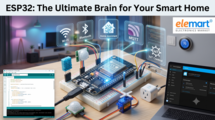
ESP32 has become one of the most popular choices for IoT development because it combines powerful processing capabilities with integrated wireless connectivity.
Unlike many traditional microcontrollers, ESP32 includes built-in Wi-Fi and Bluetooth functionality, reducing the need for additional hardware modules.
ESP32 boards are commonly used for:
- Smart home automation
- Wireless monitoring systems
- IoT devices
- Industrial automation
- Environmental sensing
Advantages of ESP32 include:
- Integrated Wi-Fi and Bluetooth
- Dual-core processing
- Low power consumption
- Cost-effectiveness
- Extensive IoT support
For connected applications, ESP32 offers an excellent balance between performance, functionality, and affordability.
Understanding Raspberry Pi Boards
Raspberry Pi differs from traditional microcontroller boards because it functions as a compact single-board computer.
It runs a full operating system and supports advanced software applications.
Raspberry Pi is ideal for:
- Artificial Intelligence
- Computer vision
- Media servers
- Edge computing
- Machine learning
- Advanced automation
Popular options include:
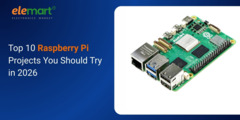
Raspberry Pi 5
High-performance computing for demanding applications.
Raspberry Pi 4
Versatile and widely used across industries.
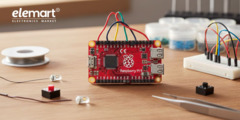
Raspberry Pi Zero 2 W
Compact solution for lightweight projects.
When projects require multitasking, graphical interfaces, or advanced data processing, Raspberry Pi often becomes the preferred choice.
Consider Power Consumption
Power efficiency is especially important for battery-operated and remote applications.
Boards with high processing power often consume more energy, while microcontroller-based platforms typically offer lower power requirements.
Low-power development boards help:
- Extend battery life
- Reduce operating costs
- Improve reliability
- Support remote deployments
For portable IoT systems, selecting an energy-efficient platform can significantly improve long-term performance.
Evaluate Input and Output Requirements
Every project interacts with external devices through input and output interfaces.
Examples include:
- Sensors
- Displays
- Motors
- Relays
- Communication modules
The number of available GPIO pins varies across development boards.
Before selecting a board, calculate:
- Number of sensors required
- Number of outputs needed
- Communication interfaces
- Expansion requirements
Boards with insufficient I/O capacity may limit future development opportunities.
Consider Software Support and Community Resources
A strong developer community can dramatically simplify project development.
Popular platforms such as Arduino, ESP32, and Raspberry Pi benefit from:
- Extensive documentation
- Example projects
- Tutorials
- Open-source libraries
- Community forums
Good software support reduces development time and makes troubleshooting easier.
For beginners, selecting a platform with strong community backing often leads to a smoother learning experience.
Future Scalability Matters
Many projects evolve over time. What starts as a simple prototype may eventually become a commercial product.
Selecting a scalable development board helps support future upgrades and feature additions.
Consider:
- Additional sensors
- Cloud integration
- AI capabilities
- Network expansion
- Increased processing requirements
Planning for future growth helps avoid costly redesigns later.
Common Applications of Development Boards
Development boards support a wide variety of applications across multiple industries.
Smart Home Automation
Controlling lights, appliances, security systems, and energy management solutions.
Internet of Things (IoT)
Connecting devices, sensors, and cloud platforms.
Robotics
Building autonomous systems, robotic arms, and educational robots.
Artificial Intelligence
Running machine learning models and edge AI applications.
Industrial Automation
Monitoring equipment, controlling processes, and improving efficiency.
Education and Research
Teaching programming, electronics, and embedded systems.
Their versatility makes development boards essential tools for innovation.
Where to Buy Genuine Development Boards
The quality of your development board directly impacts project reliability.
Purchasing from a trusted supplier ensures:
- Genuine products
- Better compatibility
- Reliable performance
- Technical support
- Warranty coverage
A trusted electronics platform should offer a wide selection of Arduino boards, ESP32 modules, Raspberry Pi products, sensors, communication modules, and accessories.
Elemart provides a comprehensive range of development boards and electronic components designed to support students, developers, startups, and businesses across various industries.
Conclusion
Choosing the right development board is one of the most important decisions in any electronics, IoT, AI, or robotics project. The ideal board depends on your specific requirements, including processing power, connectivity, power consumption, scalability, and budget.
Arduino boards are excellent for beginners and educational projects, ESP32 boards are ideal for IoT applications with built-in wireless connectivity, and Raspberry Pi platforms provide advanced computing capabilities for AI and complex systems. Understanding these differences allows developers to make informed decisions and create more efficient solutions.
As technology continues to advance, development boards will remain essential tools for innovation. Whether you are building your first prototype or developing a commercial product, selecting the right platform can significantly improve project success. Elemart offers a wide range of genuine development boards, sensors, modules, and accessories, helping innovators find the right tools to bring their ideas to life.