Introduction: The Crucial First Step in IoT Development
If you are embarking on an Internet of Things (IoT) project, you have already navigated the most conceptually challenging part: defining the problem and imagining the solution. You have the sensors, the power source, and the physical enclosure. But before you can write the first line of elegant, functioning code, you must make a foundational decision that will dictate your development speed, your long-term reliability, your power consumption profile, and ultimately, the viability of your product: Which microcontroller (MCU) will you use?
The modern embedded world offers an overwhelming array of choices. You might see chips from Nordic, Silicon Labs, STMicroelectronics, Espressif, and dozens of others. For the average developer—especially one tackling a complex IoT scenario—this array can feel like standing in a hardware supermarket with every possible appliance model available.
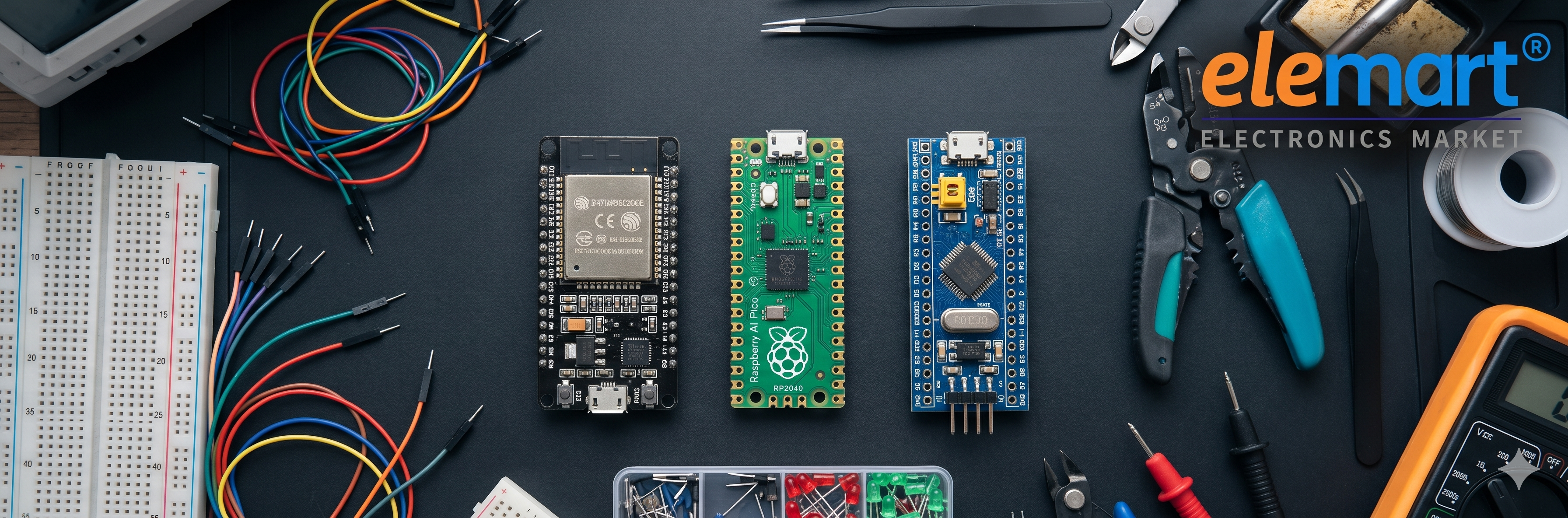
Fortunately, when focusing on three of the most prominent, modern, and powerful contenders—the ESP32, the Raspberry Pi RP2040, and the STM32—the landscape becomes clearer. Each of these three families of microcontrollers is incredibly capable, yet they are optimized for fundamentally different goals, development philosophies, and deployment environments. Choosing the wrong one can lead to crippling frustration, endless firmware bugs, or, worse, a product that fails in the field because it drains its battery too quickly.
This comprehensive guide is designed to be your ultimate decision-making matrix. We will deep-dive into the architecture, strengths, weaknesses, and ideal use cases for the ESP32, the RP2040, and the STM32. By the time you finish reading, you won't just know the features; you'll understand the philosophy behind each chip, allowing you to match the silicon power to the demands of your unique IoT endeavor.
I. The Connectivity King: Espressif ESP32
The ESP32, manufactured by Espressif, is often the first MCU name that pops into the mind of a hobbyist or a rapid-prototyping engineer who needs to get a device connected to the cloud quickly. Its primary identity is defined by its phenomenal integrated wireless capabilities.
Architectural Profile and Core Strengths
The ESP32 is a System-on-a-Chip (SoC), a term that immediately tells us it’s more than just a processor. It integrates the CPU cores, multiple communication protocols, and the radio stack onto a single piece of silicon.
Key Technical Features:
- Integrated Radio: This is its superpower. It includes both 2.4 GHz Wi-Fi and Bluetooth Low Energy (BLE) functionality built-in. You do not need external modules; it just works.
- Processing Power: It typically features dual-core Xtensa LX6 processors, providing ample processing muscle for network handling, sensor data processing, and executing complex application logic simultaneously.
- Peripherals: It boasts a wide array of peripherals, including multiple ADC/DACs, plenty of GPIO pins, and support for common communication buses like SPI, I²C, and UART.
- Deep Sleep Modes: While powerful, it is crucial to note that its power management, while improving, must be carefully managed, especially when balancing high-speed Wi-Fi usage with deep sleep modes.
The Development Ecosystem and User Experience
One of the greatest strengths of the ESP32 is its accessibility. The community has built around it an incredibly rich and mature development environment, predominantly supported by the Arduino framework and various vendor-specific tools. This ease of initial setup dramatically lowers the barrier to entry for IoT projects.
Ideal Use Cases (Where the ESP32 Shines)
- Rapid Prototyping: If your first goal is "connect it and see the data flow," the ESP32 is the fastest path to realization.
- Smart Home Devices: Any device that needs to communicate robustly via Wi-Fi or Bluetooth—smart locks, remote sensors, environmental monitors—is an ideal fit.
- Web-Connected Nodes: Applications that require an embedded web server or complex MQTT/HTTP interactions are streamlined by the ESP32's integrated stack.
Limitations and When to Look Elsewhere
While connectivity is its specialty, the ESP32 sometimes requires more careful management of power consumption in long-term, battery-operated deployments compared to dedicated low-power MCUs. Furthermore, when the absolute highest level of industrial reliability, specific real-time operating system (RTOS) certification, or niche peripheral support (like specific industrial fieldbuses) is required, a dedicated vendor like STMicroelectronics might offer a more robust, pre-certified solution.
II. The Accessible Powerhouse: Raspberry Pi RP2040
The RP2040, the core chip used in the highly popular Raspberry Pi Pico, represents a unique and modern entrant into the MCU market. It was designed with a focus on exceptional developer experience, raw performance for its size, and robust GPIO capabilities.
Architectural Profile and Core Strengths
The RP2040 is built around the ARM Cortex-M0+ core. While the M0+ might suggest modest power compared to the Cortex-M4/M7 found in STM32, the RP2040 excels in its foundational design philosophy: raw I/O power and predictability.
Key Technical Features:
- Dual-Core Architecture: Like the ESP32, it offers dual-core processing, which is excellent for offloading tasks (e.g., one core handles sensor reading/data preparation while the other manages communication).
- PIO (Programmable I/O): This is the RP2040’s most distinguishing and valuable feature. The PIO allows the developer to create custom, highly efficient hardware state machines directly in code. This means you can implement custom communication protocols or highly specialized timing requirements (like bit-banging advanced protocols) that standard peripheral libraries might struggle with, giving you unparalleled low-level control.
- Analog and Digital Robustness: The board structure and the chip itself are highly regarded for their stable operation and excellent, predictable GPIO timing.
- Ease of Use: It is deeply integrated into the Raspberry Pi ecosystem, offering massive community support and simplified peripheral breakout boards.
The Development Ecosystem and User Experience
The RP2040 maintains excellent compatibility with the Arduino framework and is very easy to learn. However, its true power is unlocked when developers utilize the PIO and dive into direct C/C++ programming, allowing them to optimize timing loops with a precision rarely achieved in other general-purpose MCUs.
Ideal Use Cases (Where the RP2040 Shines)
- Custom Hardware Interfaces: If your project relies on communicating with unusual, non-standard, or timing-critical peripheral devices, the PIO is a game-changer.
- General Computing Logic: Projects where the core difficulty lies in complex data processing, custom timing, or managing multiple simultaneous, isolated tasks.
- Cost-Effective Learning and Experimentation: It offers a professional-grade development experience at a remarkably low cost, making it perfect for student projects and initial hardware validation.
Limitations and When to Look Elsewhere
The RP2040, in its core form, does not include integrated Wi-Fi or Bluetooth—it is a raw processor that needs external communication modules. Therefore, for pure, cloud-based IoT tasks where integration simplicity is paramount, the ESP32 has an immediate advantage. Furthermore, while excellent, its peripheral depth and RTOS support, while improving, often lag behind the sheer breadth and depth of options offered by the STM32.
III. The Industrial Workhorse: STMicroelectronics STM32
The STM32 family (developed by STMicroelectronics) is the embodiment of professional-grade, industrial-strength embedded systems. If the ESP32 is the plug-and-play connectivity expert, and the RP2040 is the customizable timing wizard, the STM32 is the deeply engineered, highly reliable Swiss Army knife of the embedded world.
Architectural Profile and Core Strengths
The STM32 family does not represent a single chip; it represents a massive, feature-rich family of chips, built around various ARM Cortex cores (Cortex-M3, Cortex-M4, Cortex-M7, etc.). This variability allows ST to target virtually every possible performance and power profile.
Key Technical Features:
- Cortex Variety: The ability to choose between different core versions (e.g., M4 for Floating Point Unit (FPU) support, M7 for extreme high performance) means the MCU can be precisely sized for the application's computational needs.
- Peripherals Density and Depth: This is STM32's hallmark. It offers unparalleled depth in peripheral support. We are talking about advanced DMA controllers, highly configurable ADCs with sophisticated sampling rates, multiple communication buses (including specialized industrial ones like CAN, RS-485), and integrated crystal oscillators for maximum stability.
- Industrial Grade Reliability: STM32 parts are designed for rigorous environments—extreme temperature fluctuations, high electromagnetic interference (EMI), and long lifecycles—making them the industry standard for mission-critical equipment.
- Hardware Abstraction: The robust ecosystem (CubeMX/CubeIDE) helps developers manage the sheer complexity and vast array of configurable registers that define the chip.
The Development Ecosystem and User Experience
The STM32 ecosystem is mature, professional, and often verbose. Using tools like ST's STM32CubeMX requires a steeper initial learning curve than the ESP32's Arduino IDE. However, this complexity is a feature, not a bug. It forces the developer to manage hardware registers and peripherals at a low level, resulting in code that is incredibly efficient, predictable, and deterministic—crucial traits for industrial control systems.
Ideal Use Cases (Where the STM32 Shines)
- Industrial Automation/Control: Motor control, robotics, PLCs (Programmable Logic Controllers), and machinery where reliability and deterministic real-time performance are non-negotiable.
- High-Performance Signal Processing: Medical devices, complex sensor fusion, and image processing that requires dedicated floating-point unit (FPU) acceleration (M4/M7 cores).
- Battery-Powered, Long-Life Sensor Networks: For projects where the primary constraint is minimal, predictable power drain over years of operation, a carefully selected STM32 line often leads to the most optimized result.
Limitations and When to Look Elsewhere
The primary drawbacks of the STM32 for the average developer are its complexity and the sheer size of its product line. Finding the "right" chip requires deep understanding of the datasheet. Furthermore, while some models support wireless communication, it is often implemented via external breakout boards, making the initial setup less "all-in-one" than the ESP32.
IV. The Ultimate Comparison: Feature-by-Feature Deep Dive
To crystallize the differences, let's place these three powerful MCUs side-by-side across the most critical parameters of an IoT project.
| Feature / Parameter | ESP32 (Espressif) | RP2040 (Raspberry Pi) | STM32 (STMicroelectronics) || :--- | :--- | :--- | :--- || Primary Strength | Integrated Connectivity (Wi-Fi/BT) | Custom I/O & Timing Control (PIO) | Industrial Reliability & Peripheral Depth || CPU Core Type | Dual-core Xtensa LX6 | Dual-core ARM Cortex-M0+ | Single/Dual Core ARM Cortex-M (M3/M4/M7) || Connectivity | Built-in Wi-Fi & BLE (Exceptional) | None (Requires external modules) | Highly dependent on model; usually external modules needed. || Power Consumption | Moderate to High (Must manage radio use) | Excellent (Generally low power by design) | Highly variable; can be tuned for extreme efficiency (deep sleep) || Real-Time Determinism | Good (Can be impacted by networking stack) | Excellent (PIO gives precise timing control) | Exceptional (Designed for deterministic, hard real-time control) || Development Complexity | Low to Moderate (Excellent beginner support) | Low to Moderate (Easy entry, complex via PIO) | Moderate to High (Requires deeper understanding of embedded principles) || Best For | Smart Home, Quick Cloud Integration, Web Apps | Custom Protocols, Data Acquisition, Low-level Computing | Industrial Control, Motor Management, Safety-Critical Systems |
Deconstructing the Trade-Offs: Power vs. Features vs. Ease
- The Connectivity Trade-Off: If your project lives and dies by its ability to connect to the internet, and you need minimal fuss, the ESP32 is the default winner. It handles the complex Wi-Fi stack for you.
- The Customization Trade-Off: If your project involves talking to a strange or vintage sensor that requires highly specialized, micro-timed communication (e.g., reading a protocol that operates in narrow time windows), the RP2040's PIO gives you the unique hardware lever to solve this puzzle where others might fail.
- The Reliability Trade-Off: If this product is going to be used in a factory, in freezing cold weather, or needs to run for five years without fail, the STM32 often provides the highest degree of peripheral robustness, standardized industry certifications, and guaranteed real-time performance.
V. Decision Flowchart: Choosing Your MCU
To synthesize this deep dive into actionable advice, think of this section as a series of yes/no questions that should guide your choice.
1. Ask: Does my project absolutely need Wi-Fi or Bluetooth connectivity, and should I prototype this quickly?
- YES: $\rightarrow$ ESP32. Its integrated radio is unbeatable for speed and ease of deployment.
- NO: $\rightarrow$ Proceed to Question 2.
2. Ask: Is the core challenge of my project related to communicating with non-standard, custom, or timing-critical hardware, or does it need extremely high, precise I/O control?
- YES: $\rightarrow$ RP2040. Its PIO is your superpower here, allowing you to build proprietary hardware interfaces.
- NO: $\rightarrow$ Proceed to Question 3.
3. Ask: Is this project designed for industrial, mission-critical, or safety-critical applications where predictable, long-term performance, and deep peripheral control are paramount (e.g., medical, automotive, robotics)?
- YES: $\rightarrow$ STM32. Its industrial heritage, diverse core options, and robust peripheral management are unmatched.
- NO: $\rightarrow$ Reconsider: If you need connectivity but not industrial rigidity, stick with the ESP32. If you need custom I/O but are fine connecting it externally, the RP2040 is great.
Scenario Examples to Cement the Choice
Scenario A: Smart Thermostat Monitoring HVAC (IoT) Requirements: Needs Wi-Fi connectivity for cloud data logging, needs to read several standard sensors (temp/humidity/pressure), and must run off a battery for months. Best Choice: ESP32 (with power management focus). The built-in connectivity is a huge time-saver, and modern firmware can manage the power cycle efficiently enough for most home use cases.
Scenario B: Data Logger Reading a Custom Protocol Sensor Array Requirements: Needs to read data from a specialized, decade-old industrial sensor that uses a proprietary timing protocol (not standard SPI or I2C). Needs raw, optimized, repeatable timing. Best Choice: RP2040. The PIO will allow you to build a state machine that precisely replicates the necessary timings, a task that would be overly difficult or impossible with general-purpose peripheral libraries.
Scenario C: Robotic Arm Motor Controller for a Factory Floor Requirements: Needs to manage multiple stepper motors, perform inverse kinematics calculations (high floating-point math), maintain hard real-time motor control, and operate reliably across extreme temperature ranges. Best Choice: STM32 (M4 or M7 series). The reliable industrial grade nature, the explicit floating-point unit (FPU) support, and the predictable peripheral handling make it the only suitable choice for safety-critical motion control.
VI. Conclusion: The Philosophy of Selection
Choosing the right microcontroller isn't just about comparing spec sheets; it is about understanding the philosophy of the silicon.
- Choose the ESP32 when: Your project is defined by its connection. You need to connect easily and get data to the internet with minimal struggle.
- Choose the RP2040 when: Your project is defined by its interface. You need to talk to something unusual, control timing down to the clock cycle, or focus purely on the elegant logic of data acquisition and processing.
- Choose the STM32 when: Your project is defined by its reliability. You need it to perform its function correctly, deterministically, under the harshest conditions, and handle complex, industrial control loops.
By understanding these deep differentiators—Connectivity (ESP32), Customization (RP2040), and Robustness (STM32)—you transform the daunting task of hardware selection into a clear, methodical engineering decision. Armed with this knowledge, your IoT project journey is set not just for success, but for professional-grade, lasting success. Happy building!