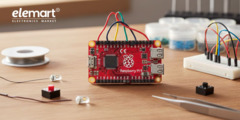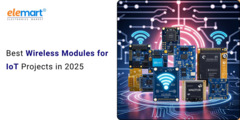

The Internet of Things (IoT) has emerged as one of the most transformative technologies of the modern era. From smart homes and connected healthcare devices to industrial automation and smart cities, IoT is reshaping how we interact with the world around us. At the heart of every IoT system lies a combination of hardware and software working seamlessly together—and one of the most critical hardware elements is Electronic Modules.
Electronic Modules simplify the process of building IoT systems by combining multiple Electronic Parts into compact, ready-to-use units. Instead of designing circuits from scratch, developers can use these modules to quickly build, test, and deploy their ideas. However, choosing the right modules is not always easy. With so many options available in the market, selecting the wrong component can lead to performance issues, compatibility problems, and increased development costs.
With the growing availability of Electronic components in India, developers, students, and businesses now rely on trusted platforms like Elemart, a leading Online Electronic store, to access high-quality modules for their IoT projects. This blog provides a complete guide to choosing the right Electronic Modules by exploring their features, types, applications, and best practices.
What Are Electronic Modules in IoT?
Electronic Modules are pre-assembled circuit units designed to perform specific tasks within an electronic system. These modules typically include sensors, microcontrollers, communication interfaces, and power management circuits, all integrated into a single board.
Unlike individual components, modules are easier to use because they are designed for plug-and-play functionality. This makes them highly suitable for beginners and professionals alike.
Key Characteristics of Electronic Modules:
- Pre-designed and ready to use
- Easy integration with microcontrollers
- Reduced need for complex circuit design
- Compact and efficient
- Reliable performance
These modules are widely used in Smart home automation systems India, robotics, industrial automation, and IoT applications.
Importance of Choosing the Right Electronic Modules
Selecting the right Electronic Module is one of the most important decisions in any IoT project. The performance, reliability, and scalability of the system depend heavily on the quality and compatibility of the modules used.
A poorly chosen module can result in:
- Inaccurate data collection
- System instability
- Increased power consumption
- Compatibility issues
- Higher maintenance costs
On the other hand, choosing the right module ensures:
- Smooth system operation
- Accurate data processing
- Long-term reliability
- Efficient energy usage
This is why it is always recommended to purchase modules from a trusted Electronic components Supplier or Electronic Hardware Store.
Key Features to Consider When Choosing Electronic Modules
Before selecting a module for your IoT project, it is important to evaluate several key features. These factors will help you choose the right component for your specific application.
1. Compatibility
Compatibility is one of the most important factors. Ensure that the module works seamlessly with your microcontroller or development board.
For example:
- Arduino-based projects require compatible Arduino Uno parts
- Raspberry Pi projects require proper Raspberry Pi accessories
2. Power Consumption
Power efficiency is crucial, especially for battery-powered IoT devices. Low-power modules help extend battery life and reduce energy costs.
3. Communication Protocol
IoT systems rely on communication between devices. Choose modules that support the required communication protocols such as:
- Wi-Fi
- Bluetooth
- Zigbee
- LoRa
- GSM
Each protocol has its own advantages depending on range, speed, and power consumption.
4. Accuracy and Reliability
For sensor modules, accuracy is critical. Inaccurate readings can lead to incorrect system behavior.
5. Size and Design
Compact modules are ideal for portable devices and embedded systems. Smaller modules help in creating efficient and space-saving designs.
6. Ease of Integration
Modules should be easy to connect and program. Beginner-friendly modules with clear documentation are highly recommended.
7. Cost and Availability
Always look for Affordable Electronic components from a reliable Online Electronic store. Availability of components is also important for future scalability.
Types of Electronic Modules Used in IoT
IoT systems use a variety of modules depending on their functionality. Understanding these types helps in selecting the right combination for your project.
1. Sensor Modules
Sensor modules detect environmental conditions and convert them into electrical signals.
Common Sensor Modules:
- Temperature sensors
- Humidity sensors
- Gas sensors
- Motion sensors
- Light sensors
These modules are widely used in smart home devices, environmental monitoring, and industrial systems.
2. Communication Modules
Communication modules enable data exchange between devices and networks.
Examples:
- Wi-Fi modules (ESP8266, ESP32)
- Bluetooth modules (HC-05, HC-06)
- GSM modules
- LoRa modules
These modules are essential when you Buy IoT components online for connected systems.
3. Control Modules
Control modules act as the brain of the system. They process data and control other modules.
Examples:
- Arduino boards
- Raspberry Pi boards
Used extensively in Arduino Robotic Kits and DIY robotics kits.
4. Power Modules
Power modules regulate voltage and ensure stable operation of the system.
Examples:
- Voltage regulators
- Battery management systems
- Power supply modules
They are essential for maintaining the performance of all Electronic Parts.
5. Display Modules
Display modules provide visual output for user interaction.
Examples:
- LCD displays
- OLED displays
- LED matrices
These are commonly used in monitoring systems and smart interfaces.
Applications of Electronic Modules in IoT
Electronic Modules are used in a wide range of applications across different industries.
1. Smart Home Automation
IoT modules enable automation of lighting, appliances, and security systems using smart home gadgets.
Examples include:
- Smart lighting systems
- Motion-based security alarms
- Temperature-controlled air conditioning
These systems are part of advanced Smart home automation systems India.
2. Industrial Automation
In industries, IoT modules are used for:
- Machine monitoring
- Predictive maintenance
- Process automation
They improve efficiency and reduce downtime.
3. Healthcare Systems
IoT modules are used in wearable devices and medical monitoring systems.
Examples include:
- Heart rate monitors
- Temperature sensors
- Remote health monitoring devices
4. Agriculture
In agriculture, sensor modules monitor soil moisture, temperature, and humidity.
This helps farmers optimize irrigation and improve crop yield.
5. Smart Cities
IoT modules are used in smart city applications such as:
- Traffic management
- Waste management
- Air quality monitoring
Benefits of Using Electronic Modules in IoT
Electronic Modules offer several advantages that make them ideal for modern electronic systems.
Key Benefits:
- Easy to use and integrate
- Reduces development time
- Improves system reliability
- Supports scalability
- Cost-effective solution
With access to Online Electronic components in India, developers can build advanced systems without complex setups.
How to Choose the Right Module for Your IoT Project
Selecting the right module requires a systematic approach.
Step-by-Step Guide:
- Define your project requirements
- Identify necessary functionalities
- Check compatibility with controllers
- Evaluate power needs
- Compare features and cost
- Choose a reliable Electronic components Supplier
This approach ensures better performance and fewer issues.
Why Buy Electronic Modules from Elemart
Elemart is a trusted Online Electronic store offering a wide range of IoT modules and Electronic Products Online.
Key Advantages:
- Wide selection of Electronic components in India
- High-quality and tested modules
- Affordable pricing
- Fast delivery
- Trusted Electronic Hardware Store
Customers can also explore Robotics Kits online, Electronic Kits, and automation products.
Future of IoT Modules in India
The future of IoT in India is very promising. With advancements in AI, automation, and connectivity, the demand for IoT modules is increasing rapidly.
Key Trends:
- Growth of smart homes
- Expansion of industrial IoT
- Development of smart cities
- Increased use of automation
- Rising demand for connected devices
This growth will increase the demand for Electronic components in India and reliable suppliers.
Conclusion
Choosing the right Electronic Modules is essential for building efficient, reliable, and scalable IoT systems. Each module—whether it is a sensor, communication unit, control board, or power module—plays a critical role in the overall performance of the system.
With the availability of Online Electronic components in India, developers can easily access high-quality modules for their projects. Elemart, as a trusted Online Electronic store, provides a comprehensive range of IoT modules, Arduino Uno parts, DIY robotics kits, Raspberry Pi accessories, and smart home devices.
If you want to build advanced IoT systems and ensure long-term success, choosing the right modules from Elemart is a smart and reliable decision.
FAQs
1. What are Electronic Modules in IoT and why are they important?
Electronic Modules in IoT are pre-designed circuit units that perform specific functions like sensing, communication, or control. They are important because they simplify the development process, reduce design complexity, and ensure reliable performance. Instead of building circuits from scratch, developers can use modules to quickly create efficient IoT systems for applications like smart home devices, industrial automation, and connected systems.
2. How do I choose the right Electronic Module for my IoT project?
Choosing the right module depends on your project requirements. You should consider compatibility with controllers like Arduino or Raspberry Pi, power consumption, communication protocols, and accuracy. It is also important to evaluate the size, ease of integration, and cost. Buying from a trusted Online Electronic store ensures you get high-quality Electronic components in India for better performance.
3. What are the main types of Electronic Modules used in IoT systems?
The main types of Electronic Modules include sensor modules, communication modules, control modules, power modules, and display modules. Each type serves a specific function in an IoT system. For example, sensor modules collect data, communication modules transmit data, and control modules process information. Together, they form a complete and functional IoT system.
4. Can beginners use Electronic Modules for IoT projects easily?
Yes, Electronic Modules are beginner-friendly and designed for easy integration. They come with built-in circuitry and standard interfaces, making them simple to connect with microcontrollers like Arduino. Beginners can use Electronic Kits and modules to learn electronics, build projects, and understand IoT concepts without needing advanced technical knowledge or complex circuit design skills.
5. Where can I buy high-quality Electronic Modules online in India?
You can buy high-quality Electronic Modules from Elemart, a trusted Online Electronic store in India. It offers a wide range of Electronic components in India, including sensor modules, communication modules, Arduino Uno parts, and Raspberry Pi accessories. Elemart provides affordable pricing, reliable products, and fast delivery, making it a preferred choice for developers and learners.
6. What are the benefits of using Electronic Modules instead of individual components?
Electronic Modules offer several advantages over individual components. They are easy to use, reduce development time, and ensure compatibility between parts. Modules also improve reliability and simplify troubleshooting. By using modules, developers can focus on building and innovation rather than circuit design, making them ideal for both beginners and professionals working on IoT and automation projects.